
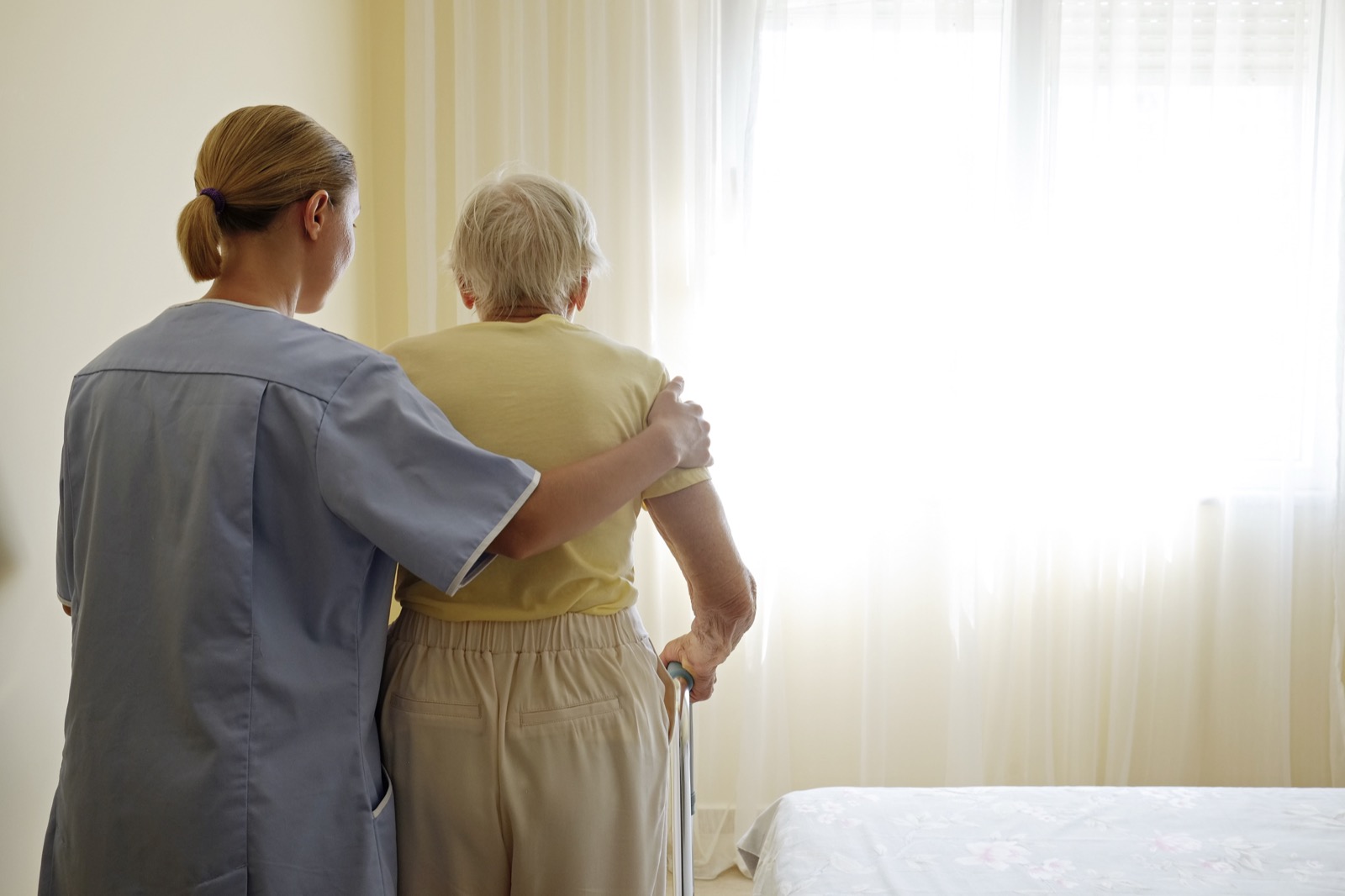
Recovery and mobility care at home in Houston.
Steady hands so healing happens where it happens best. The move home from the hospital, kept clean. Falls prevented before they happen. Gentle, supervised movement that rebuilds strength and the confidence to use it.
- Licensed in TexasHCSSA #023843
- How we workPrivate pay, non-medical
- When you callA real person, never a call center
Most setbacks at home are quiet ones. A walker left across the room. A reminder missed by a day. A first step taken alone, on a rug that should have been rolled up weeks ago. The body does the healing, but the healing only holds if the days around it are steady, and the days right after a hospital are the least steady a household ever runs. We are there for the parts a discharge packet cannot do for you: the move from bed to chair done safely, the schedule kept, the home cleared of the things that trip a recovery up. We are a non-medical agency, so we complement your home-health nurses and your therapists, we do not replace them. We keep the ordinary day on track while the clinical team does the clinical work.
Home is where healing happens best, when the day around it is steady.
Each kind of care here gets its own honest account. Where one has a page of its own, you can read further.
Coming home from the hospital after surgery
The hospital hands you a packet and a discharge time, and then the hardest stretch begins in your own living room. The first hours home are when medication reminders, mobility limits, and the home routine are easiest to let slip, and a recovery that goes sideways rarely does it dramatically. It happens because a dose was forgotten, a walker was out of reach, or an instruction on page three was never turned to. We can begin care the day of discharge, and the Administrator reads the discharge instructions through with you directly so nothing slips through the cracks in the move home.
The first 72 hours are the most demanding, and often around-the-clock. Help to the bathroom at any hour. Medication reminders kept to the post-op schedule the doctor set. A close eye on how the day is going, with anything that looks off reported to you, and to the home-health nurse when something warrants it, before it becomes a bigger problem rather than after. A fall prevented by someone being present before your loved one stands. None of it is clinical work, and all of it is the difference between a recovery that holds and a return to the emergency room. We watch closely and tell you and the nurse what we see.
As the body steadies, the plan steps down. The first weeks of round-the-clock or daytime presence give way to independence-supporting visits, with rides to the follow-ups at Houston Methodist, Memorial Hermann, or wherever the surgeon sits. We keep the schedule, keep the home safe, and keep a readmission from being the thing that undoes the work the surgery did.
- Care that can begin the day of discharge, with the discharge packet read through with you in person
- The first 72 hours covered closely, often around-the-clock, with medication reminders kept on the post-op schedule the doctor set
- Safe transfers and a watchful eye, with anything that looks off reported to you and the home-health nurse
- Rides to follow-up appointments and the home kept clear, so a readmission never starts at home
Fall prevention that keeps a fall from ever happening
A fall is rarely the start of the trouble. It is usually the end of a long run of small risks no one had time to notice: the loose rug by the bed, the bathroom with nothing to hold onto, the habit of getting up too fast in the dark. By the time a fall happens, the cost is already steep, a fracture, a hospital stay, a recovery that erases months of independence. The work that matters is the work done before, and it is mostly attention paid every single day.
We bring a second set of eyes to a home that the family has stopped seeing clearly. We walk the rooms your loved one actually moves through and clear what does not belong there: the cords, the clutter, the rug that slides, the path to the bathroom that goes dark at night. We learn where the unsteady moments are, the rise from a low chair, the step into the shower, the turn at the top of the stairs, and we are present for them. Steady transfers, a hand at the right moment, a pace that does not rush.
Most of fall prevention is the ordinary day done with care. The walker kept within reach instead of across the room. The right shoes on instead of socks on a wood floor. A glass of water at the bedside so a two-in-the-morning trip does not become a fall in the dark. We do not wait for the first fall to start preventing the second one.
- A practical home-safety walk-through of the rooms your loved one actually uses, clearing rugs, cords, and clutter
- Steady hands at the unsteady moments: rising from a chair, stepping into the shower, the turn at the stairs
- The daily habits that quietly prevent falls, from the right footwear to a clear, lit path to the bathroom
- A second set of eyes on a home the family has stopped seeing clearly, paying attention before a fall ever happens
Gentle supervised movement to rebuild strength
After a surgery, a fall, or a long stretch in bed, strength leaves faster than anyone expects and confidence leaves with it. The body can often do more than the person believes it can, but the fear of falling keeps the steps small and the world shrinking. Rebuilding both takes someone steady alongside, every ordinary day, encouraging the next few steps and being there if they wobble.
Here is the honest line: this is not physical therapy, and we do not deliver it. A physical therapist sets the plan, prescribes the exercises, and decides what the body is ready for. We are the non-clinical presence that helps the plan actually happen between visits. The supervised walk down the hall and back. The gentle, encouraged movement the therapist cleared. The steady arm that turns a frightening lap of the garden into a daily habit. We support the PT's plan, we never replace it, and we never improvise on it.
Strength comes back the way it left, a little at a time. A few more steps than yesterday. A spoon held longer. A lap of the block that felt impossible a month ago. We carry the patience and the steady encouragement that turns a slow, frustrating recovery into forward motion, and we keep the family in the picture as the confidence returns.
- Gentle, supervised walking and movement, with a steady presence for every step and a hand if it wobbles
- Encouragement and supervision that carry the physical therapist's plan through the days between their visits
- Honest non-clinical support: we never deliver therapy, prescribe exercises, or improvise on the PT's plan
- The patience that rebuilds strength and confidence together, a few more steps than yesterday, every day
Caregivers placed on recovery and mobility cases at Giving Care Houston work through real preparation before the first shift: safe transfer and gait-belt technique, an awareness of the movement restrictions a surgeon or therapist sets after a procedure so they never push past what the care team allows, fall-risk awareness in the home, noticing when something looks off and making a same-day call to the family and the home-health nurse, and the discipline of keeping medication reminders on the schedule the first weeks of recovery ask for. They are prepared to carry a physical therapist's plan between visits without ever crossing into therapy themselves. We are caregivers, not nurses or therapists, and we work alongside the home-health and rehabilitation teams rather than replacing them. The Administrator builds the care plan with you in person, from a conversation about the real recovery in front of you, never from a template.
Licensed in Texas, HCSSA #023843.
Straight answers first, the reasoning after. If yours is not here, a real person on our care team will answer it on the phone.
- 01Can home recovery care start the day of discharge?
- Yes, and we prefer it. We can begin care the day you come home, and the Administrator reads the discharge instructions through with you so the move from hospital to home is covered from the first hour, when medication reminders, mobility limits, and the home routine are easiest to let slip. The first 72 hours are the most demanding stretch, and that is exactly when a steady presence matters most.
- 02Are your caregivers nurses or physical therapists?
- No, and we are honest about that. Giving Care Houston is a private-pay, non-medical personal-care agency. We do not perform skilled nursing, deliver physical therapy, or replace your home-health and rehabilitation teams. We handle the daily recovery work, medication reminders kept on schedule, safe transfers, fall prevention, and supervised movement that supports the therapist's plan, and we coordinate with the clinicians who do the clinical care.
- 03How do you prevent falls at home?
- Most of fall prevention happens before any fall does. We walk the rooms your loved one actually uses and clear the hazards, the loose rugs, the cords, the dark path to the bathroom, then we are present for the unsteady moments, the rise from a chair or the step into the shower. We keep the walker within reach and the daily habits safe. The goal is the fall that never happens, not the recovery from the one that did.
- 04Do you provide physical therapy at home?
- No. We do not deliver physical therapy, prescribe exercises, or decide what the body is ready for. That is the physical therapist's work. What we provide is the non-clinical encouragement and supervision that helps their plan actually happen between visits: the supervised walk, the gentle movement they cleared, a steady arm so a frightening lap of the garden becomes a daily habit. We support the PT's plan, we never replace it.
- 05How long does home recovery care usually last?
- It depends on the procedure and the person. Most major-surgery recoveries run intensively for the first week or two, often around-the-clock, then step down to daytime hours as strength and steadiness return. Fall prevention and mobility support can run as long as the season asks. We size the engagement to the real recovery in front of us and review the plan with the family as the body changes.
Where we serveGreater Houston and the surrounding areas.
Active recovery and mobility engagements in homes across Greater Houston and the surrounding areas, with rides to follow-ups at Houston Methodist and Memorial Hermann.
your family.
Call any time and tell us about your loved one. We will talk through what they are facing, what the care looks like, and how we would staff it. You reach a real person on our care team who knows your family, never a call center, and we get back to you the same day, within one business day at the latest.
A real person on our care team who knows your family answers, never a call center.